
The day after the shooting
Bondi in the immediate aftermath

Yesterday there were sirens, but today Bondi is quiet. It’s the first thing I notice as I wake up from a troubled four-hour sleep. The traffic that roars through Bondi Road has slowed. The rattle of e-bikes on footpaths has stopped. The construction site next door is still.
I lie in bed for a moment, wondering if I’ll be able to steal another few hours of sleep. But then the image of a man lying on the ground, sheet over his face, pops into my head.
So best to find comfort in routine, I think. Every day I walk down the hill to get a coffee, and today will be no different. So off I go, past the convenience store where the shopkeeper warned me of a gunman, past the traffic lights where a German tourist told me he’d hidden from bullets, past the hill that had been littered with abandoned towels, picnics, and prams. These were just ordinary places yesterday morning.
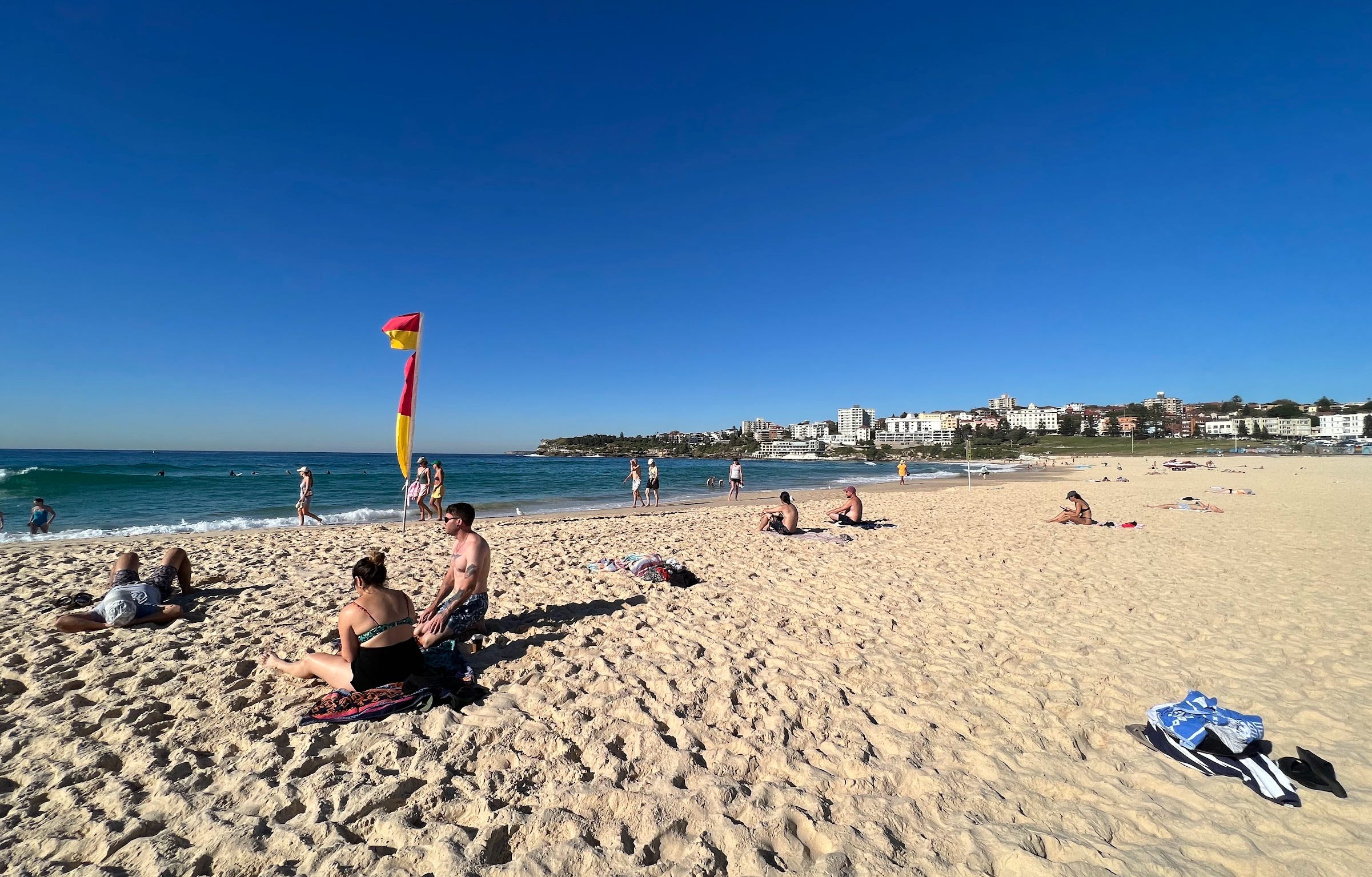
Bondi is the epicentre of the worst tragedy I’ve witnessed, but it’s also still a holiday town. The tourists booked into our hotels must still eat, and so the cafes are busy with people having breakfast, stoically trying not to let yesterday’s misery spoil their break.
I find this strangely comforting. Whatever happens, the sun will rise, the sun will set, and sunburnt tourists will visit Bondi.
Walking past crowded tables, and people wearing gym gear, I think this could almost be any other day. But of course it isn’t. The air is heavier somehow. The whole area feels like it’s sitting in the pause before a chest-rattling sob.
Or maybe that’s just me.
But I said to myself I would get a coffee, and so I do. I sip at my cappuccino and listen to snippets of conversations from the people walking by.
“...it will do miracles for your gut, I swear. You’ll be less bloated, you’ll feel…”
“...she said the wedding should happen in February, but her family can’t…”
“...he’s going to need a new shoulder. The damage from the bullet exploded…”
So then I am back in last night, thinking of two young men lingering near the media pack.
They said their father had been at the Chanukah festival, and now he wasn’t answering their calls. Both of them looked grey. The only thing I could think to do was bring them water – a gesture I knew to be useless even as I was completing it.
Where are those two now, I wonder? I hope they’re all eating breakfast. That their father’s phone had just been flat, and that’s why he didn’t answer.
As I’m thinking of phones, mine dings. Another person asking if I’m okay.
“Thanks for thinking of me,” I reply in text. “I’m fine.”
I’d received dozens of those messages and sent dozens of my own. My friends are fine. My hairdresser is fine. The poet I talk to in the cafe is fine. We are all fine.
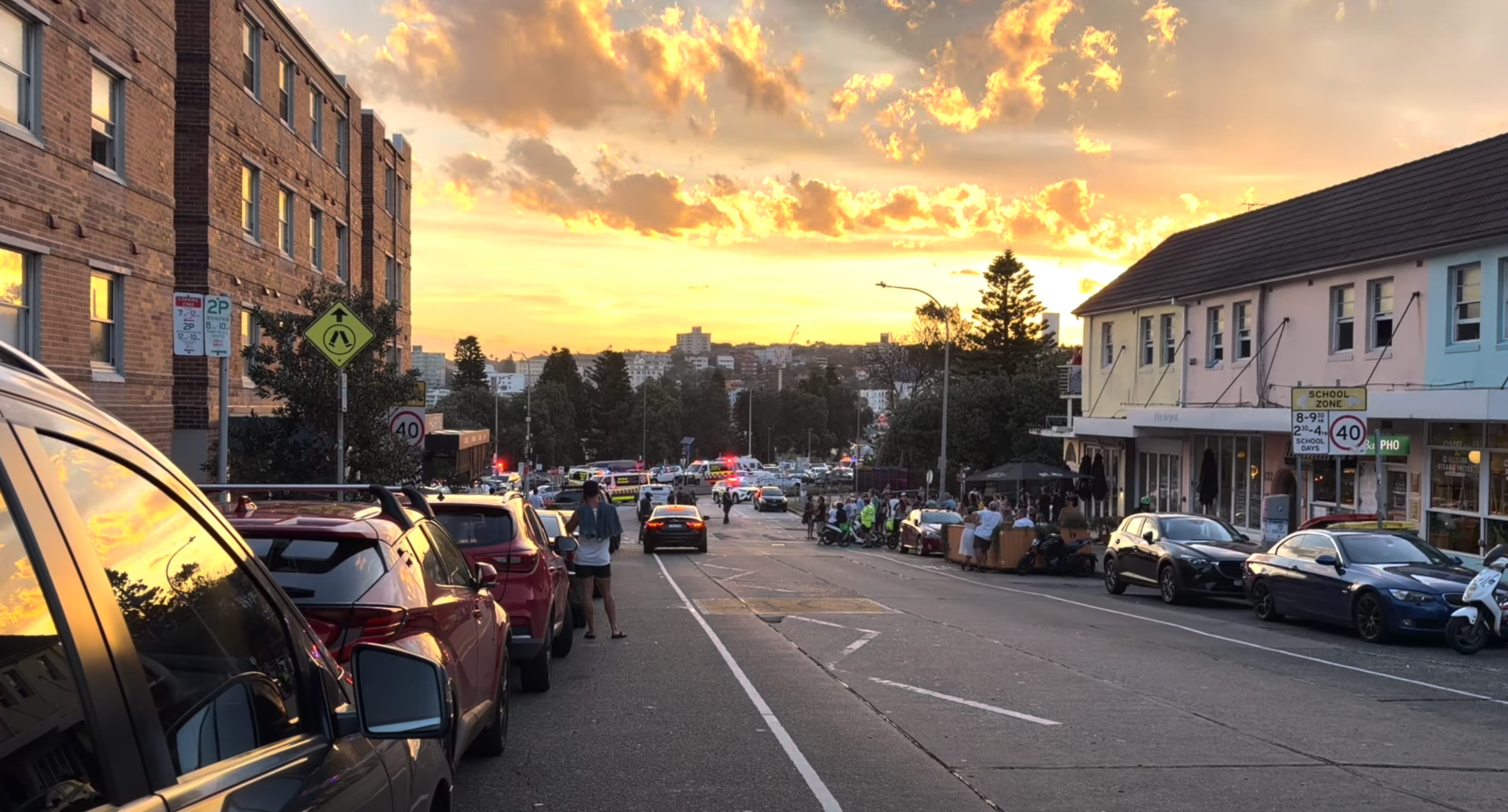
Feeling adrift, I spend the morning aimlessly crisscrossing through the streets of my suburb, not sure what I’m hoping to find. A pang of hunger finally gives me purpose, so I head to the grocery store.
Harris Farm is heaving when I get there. Of course it is. It’s one of only a couple of places in Bondi that sell flowers.
It seems the shop owners had predicted a rush on their cellophane-wrapped bouquets. They sit in an enormous cardboard box that’s been placed outside, next to the Christmas trees and discounted avocados. It’s a bit past midday, but only a few bunches remain at the bottom.
I grab some fruit, and stand in a long line of people holding white peace lilies.
The truth is I didn’t intend to visit the memorial that day. I didn’t think I was ready. But like flotsam pulled by invisible ocean currents, eventually I wash up there anyway.
I lean against a tree, look at the Pavillion’s closed gates, and the growing pile of flowers. They make the air thick and sweet like the perfume section of a department store. Here is a place I’ve been thousands of times, yet I suddenly do not recognise where I am. Where are the shoeless people with salt water hair? The laughing children on scooters? The gangs of teenagers leaving trails of vape smoke in their wake?
Eventually, I suppose, they will be back.
But in the meantime, a different group of strangers have taken their place. One of them moves to stand next to me. She is older, in her 60s, and wears a yellow hat and a yellow t-shirt which both read ‘assistant pastor’.
I brace myself for the inevitable conversation.
“So sad…” she says.
“Yes,” I reply.
“Were you here when it… happened?”
“No,” I say shortly.
But then I feel uncharitable, like I’m closing the door on a conversation she might need to have more than me. “But I was here very soon after. It was really terrible.”
She nods.
“Do you live here?” I ask.
“No, no. I live in Rozelle. I did once, though. About 20 years ago”
There is a long pause. I watch a beautiful woman in a crop top and tights filming her left hand placing flowers on the pile. She stands up, watches the footage back, and then walks away with her face still in her phone. I should be appalled. But the moment is so quintessentially Bondi, I can’t help but be distantly amused.
“Do you know how many people died here?” The assistant pastor asks me.
“Uh, no” I lie
“I read fifteen.”
Many of those fifteen people were shot next to children’s rides and petting zoos. I don’t want to be dragged into a casual conversation about the slaughter of my neighbours. Perhaps sensing there would be no titillating gossip, no gruesome details, and no sobbing forthcoming, she tells me she’s off to meet a friend.
“Before I go, can I have a hug?” she asks.
I oblige, but feel muddled afterwards.
Still, this will not be the strangest interaction I’ll have in the aftermath of the Bondi massacre.
Two days later, when I am back at work, I get a phone call from a number that’s not saved in my phone. It’s my dental clinic.
“We’re just going through our list of clients who live in Bondi and… you know… checking if you’re okay?”
“What really? Well, uh, thank you. I’m fine.”
“Good, good. We’ve only got, like, four people in Bondi, actually. But the Australian Dental Association said we should, you know, call up and see how everyone is going and stuff. It’s just terrible. And so sad.”
I recognise the voice as belonging to a chirpy dental assistant who had been at my last appointment. I’d had two fillings that day. This is much more uncomfortable.
“Yeah, it’s all very surreal,” I reply, because it is. Especially this phone call. “Thanks for checking up on me. I’ll see you at my next appointment.”
“Yes, that’s in…” I hear the clicking of a computer mouse. “...April. Take care,” she says.
Welfare checks on potentially traumatised strangers seems like a big ask for a young woman trained in teeth. But does it matter? No one knows what to do, but that doesn’t stop them from trying.
Or seeing an opportunity.
Not wanting to be dragged into another uncomfortable conversation with a stranger, I walk away from the memorial, crossing the road to put more distance between myself and the misery.
I almost immediately run into more people in matching t-shirts and hats. They’re green this time, and passing out booklets. I noticed they were in the hands of a few mourners at the memorial. I take one as I pass by, even though I am somehow certain I will not like the contents.
“The Way to Happiness – a common sense guide to better living,” the cover says.
On it, there is an illustration of a winding path leading to a sunset on the horizon.
The booklet is inane but harmless. In it, there are 21 principles like ‘take care of yourself’, ‘don’t be promiscuous’, and – most critically – ‘do not murder’. What a shame, I think, that they weren’t handing these booklets out yesterday. Think of the tragedy which could have been avoided.
It’s also a shame that the ‘Way to Happiness ’ is written by L. Ron Hubbard, and this foundation works as a recruitment arm for Scientology. I am incensed. Can the cults of the world give us a few hours before they start trying to pick off the weak, the traumatised, and the sad?
Perhaps a better person would have rolled their eyes and walked on. But I am not a better person.
“Thank you for the Scientology propaganda,” I say loudly, as I hand back the booklet.
All three green-hat-green-shirt people avoid making eye contact.
“Today of all days?” I ask. “Really?”
None of us are at our best. But I suppose we’re all trying, even the Scientologists in their desperately misguided, brainwashed way.
This is an odd time, but it doesn’t last. Before long the bulk of the flowers are cleared away. The assistant pastors and scientologists and camera crews leave as well. It still doesn’t feel normal, but perhaps one day it will.
The living must eventually move on – it is both their privilege and their burden.
You reacted much calmer than I would have to those handing out those pamphlets… Thanks for sharing the current feeling in your neighbourhood after this tragedy. Sending lots of love and free hugs without religious/cult agenda.
I don’t think we know how to act or react when tragic events occur. What preparation could we have had other than prior tragedies or trauma? At least that’s how I felt reading your own experience. I appreciated hearing a view from a local.
Not from Sydney, although that didn’t stop me being disappointed (horrified really) but not surprised that most public reactions were opportunistic.
Was it Machiavelli who said never to waste an opportunity offered by a good crisis? It’s like the power of the swell down at the beach, rolling on in, breaking over the top of the sadness and loss that should (I think??) be central to our thoughts.
It makes me angry in a frustrated way but it also makes me want to look away.