
My very racist year six project
It got good marks.

It’s been twenty-five years, and I’m still haunted by an assignment I was asked to do in year six.
In the year 2000, New South Wales junior school students had to study a subject called Human Society and its Environment — or HSIE. At the time it was a combination of geography, history, and culture.
God it sucked.
HSIE put several of the worst-taught and most-politicised subjects into a blender, and turned them into a grey, unpalatable mush. The lessons were staggeringly boring. I remember little more than that.
My textbooks are long gone, thrown out with all my notes and homework. But one artifact has managed to survive.
My racist year six project.
At first I kept this assignment because it received a good mark and was given the dignity of being stored in a display folder.
Then, as I became an adult and my views on the world expanded, I kept it as a curiosity. Perhaps even a little out of shame. After all, we can only learn from history if we acknowledge it.
We weren’t taught that in HSIE, by the way. School spares us the burden of so many uncomfortable wisdoms.
They did, however, try to teach us about Aboriginal culture. But in a way that was often reckless and unforgivably ignorant. Not that we were aware of that as students. My peers and I were twelve years old. But even then, I remember feeling a stab of unease when we were given this particular assignment on Aboriginal culture.
Miss Hooper and Mrs Barber brought both classes together to talk through the task. We – a bunch of mostly-white private school kids in a predominantly white suburb — had to come up with, and illustrate, a Dreamtime story.
I put up my hand.
“So we have to research one and write it in our own words?” I asked.
This would mean a loathed trip to the library to plunder the encyclopedias.
“No, we want you to use your imaginations.”
I’d like to think that somewhere in central Australia, around the same time, a class of Indigenous kids were tasked with coming up with a fun, new Bible story. Something involving Jesus and his pals doing more wacky adventures. Like the water walking stuff. Or the time he got everyone blitzed on water he’d turned into wine.
But that would never be the case.
Christianity and Bible stories are serious and important. Yes, even the Noah’s Ark stuff. Or the time Adam and Eve ate that very naughty apple and God got pissed at them.
At this point in my life, I had never spoken to an Aboriginal person. All I knew about them and their culture was the cartoonish portrait that we’d been taught at school. It was the kind of surface-level portrayal you’d expect on a postcard at a Circular Quay tourist shop.
We weren’t taught about the complexities around different Nations, languages and belief systems. Nor were Indigenous Australians credited as having a continuing culture that stretches back thousands of years.
No, their spirituality was just a collection of quaint little fictional stories told around fires. So of course no one took issue with a bunch of white kids making up their own Dreamtime Story.
Like all assignments, I left mine to the very last minute. In one night, soon before bed, I wrote “why the snake has no legs”, printed it out on separate pages, and quickly sketched out some colourful illustrations.
The deep and sustained cringe I feel reading this assignment back crumples me inwards like an empty coke can in an airless vacuum.
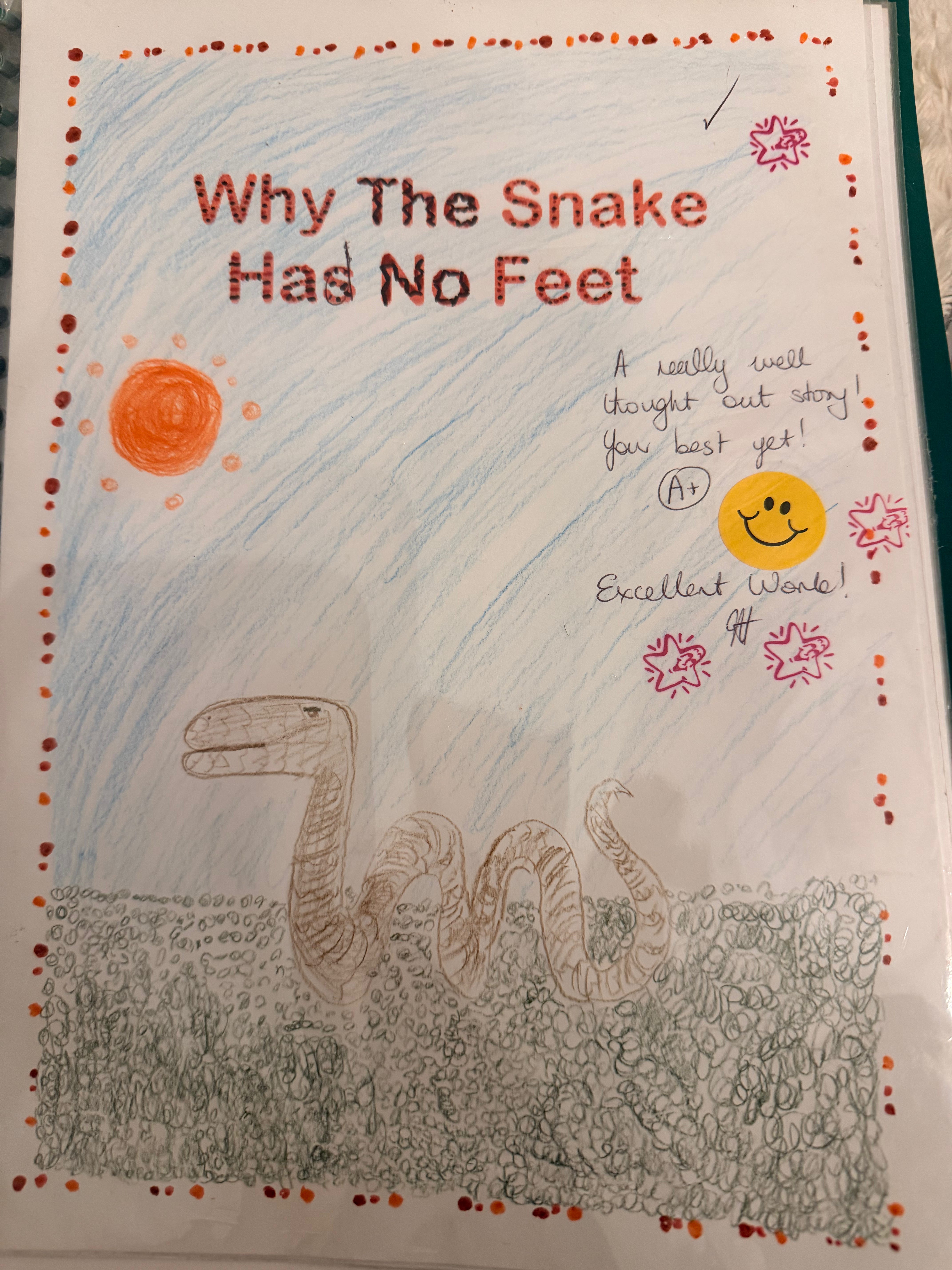
In my story, a snake loses all its legs because it angers a god by spitefully eating a colourful bird. I name the God ‘Wiluburra’ because I was twelve years old, and I thought it sounded suitably Aboriginal.
I handed in the story, decorated with some dot art drawn in texta, and called it a day. I was pleased when I received my work back with an A+ grade and the following feedback.
“A really well thought out story! Your best yet!” wrote Miss Hooper on the page.
She was often a hard woman, Hooper. A teacher with a penchant for unfair rules. This was a positively effusive comment by her standards, and I remember being shocked. We had a feud, Hooper and I.
It started with hats.
It was established and reasonable rule that children who forgot their hat must play in the shade. But for reasons known only to Hooper, she decided to take things a step further. She introduced an addendum whereby children who didn’t have their school cap must sit on a cold wooden bench for the duration of recess and lunch.
This was so illogical it incensed me. It was immaterial whether children moved or sat down in the shade. Skin cancer isn’t drawn to movement like a velociraptor. Hooper had turned sun safety into a punitive exercise in control. I vowed to have this rule overturned.
I won’t relive the details of my campaign here, but I’ll admit they still give me a slight thrill. Suffice to say I won eventually. It was my first taste of victory against senseless bureaucracy. It was intoxicating.
Miss Hooper did not like me. Fair enough. I did not like her, either. But I suspect her unusual praise is partly why I kept my assignment. Because she was usually a harsh critic, I thought her positive assessment meant I’d written something exceptional.
Who knows what the actual case was? Maybe she was just marking assignments with a glass of wine in hand, exhausted after a day of battling an obnoxious preteen who saw herself as a classroom Che Guevara.
This was just one small moment from thirteen years of schooling that stretched from 1993 to 2006. Many things have changed, of course. For me, and hopefully the education system. I’m lucky that, through travel and reading and talking to people, my world view has been given the chance to expand.
I continue to learn.
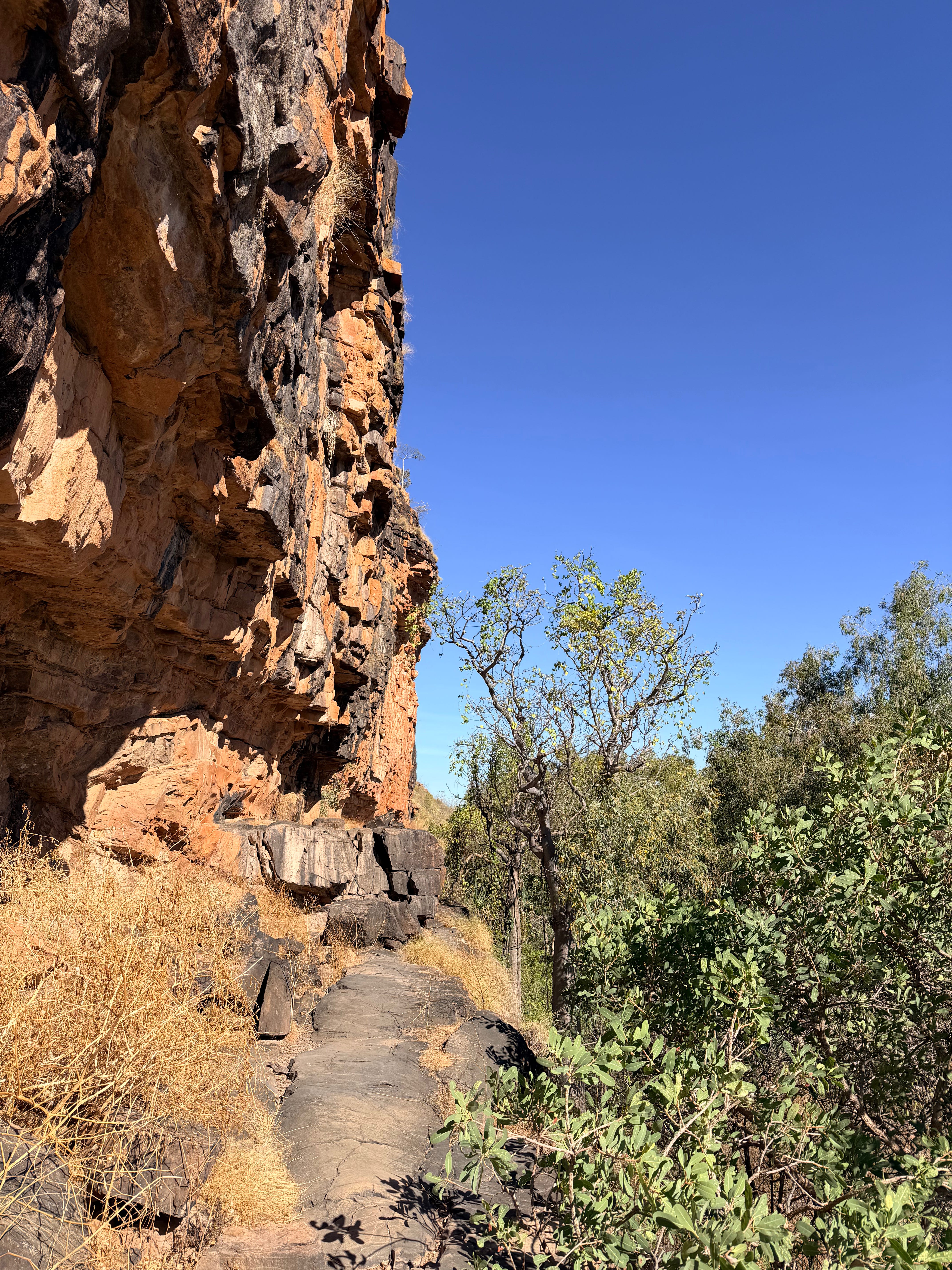
Just a couple of weeks ago I was in the far north of Western Australia in the Kimberly — a place where I once worked. I was travelling around the Gibb River Road to remote and staggeringly beautiful parts of the region. A hundred times a day my chest would ache at the beauty of the land. It felt as though my heart was cracking and mending and cracking and mending, reforming a little each time.
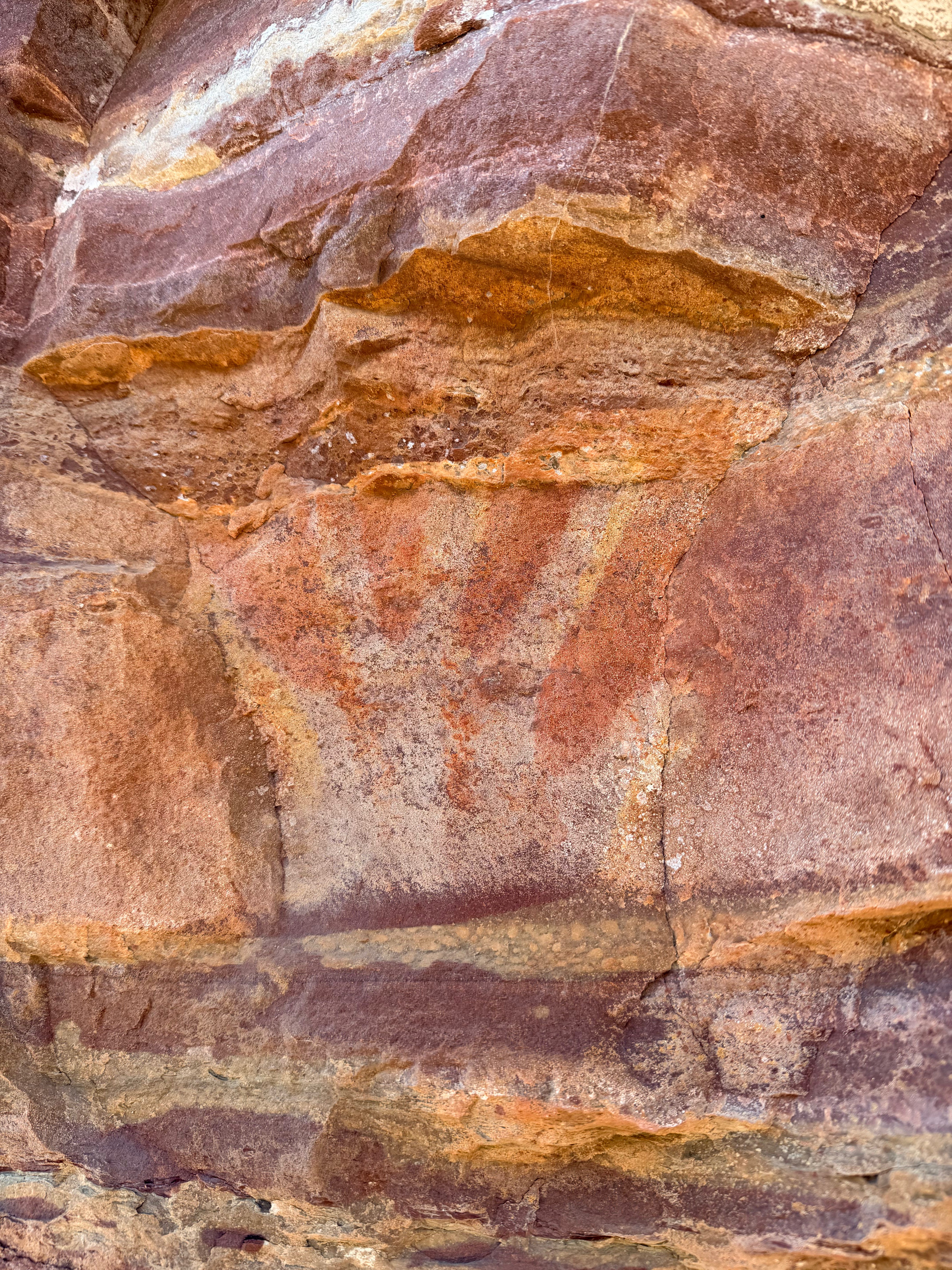
One day, we drove over corrugated dirt and through rivers until we came to an overhanging rock decorated with Indigenous art. There I found a silhouette of a hand, surrounded by white deep red paint.
Who was that person who rested their palm on that rock? What were they thinking when they looked at the still-drying paint, vivid and fresh?
I hovered my hand near where theirs had once been. I felt small and new and connected and adrift all at once. For a moment or two, the weight of time and the landscape felt like a physical pressure.
It’s as close to a religious experience as I’ve ever had.
To be fair, it’s an impossible moment to recreate in a classroom. No textbook could hope to impart that lesson.
But they never even tried.