
Don't ever, ever, ever let ads in cars
Our dystopian future awaits

So picture this. It’s 2035, and you’ve just finished work.
After saying goodbye to your colleagues, you hop in the lift. You’re immediately prompted to watch an unskippable 30-second ad before pressing the ground floor button. You try to block your ears while it plays – this insurance company’s jingle is a lab-designed earworm. You’ve read online that it’s driven people insane.
God it’s catchy, though.
Eventually you make it to the ground floor. You walk to your car, subconsciously singing about low premiums, while the reflected light from enormous billboards gives you a migraine. Shielding your eyes with your hand, you can see the outline of your skeleton.
You reach your car. Because you’ve paid for the $50 monthly ‘Premium Security Plus’ subscription, the keys unlock the door. Absolute steal. You managed to bundle it together with the ‘Gold Comfort Package’ ($25 – keeps the tyres inflated) and the ‘Atmospheric Management System’ ($40 – lets you close the sunroof).
Unfortunately, because you were running a bit late this morning, you deferred your unskippable ads. Bummer. That means you have to endure five minutes of videos before you can press the ignition.
So you sit in the car, watch your embarrassingly targeted ads (rash creams! Ozempic! Dating websites!) and then drive home where your smart fridges, smart washing machines, and smart toilets – all with their inexplicable screens – will do the same thing.
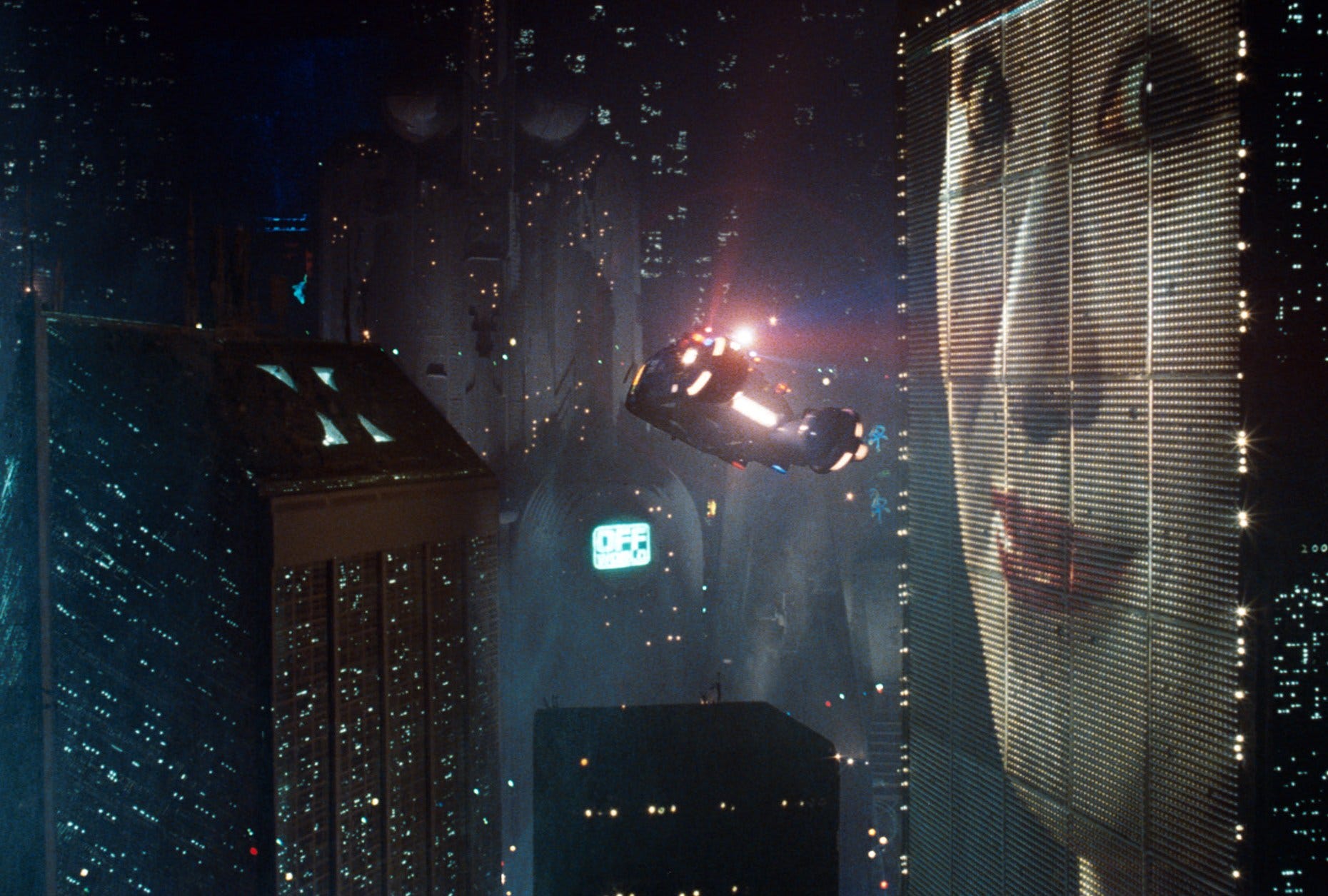
This is an exaggerated dystopia, of course. A hellish world no one would agree to.
Unless you’re a company, that is. In which case, this is a delightful, profitable version of the future. It’s probably on someone’s vision board right now.
But the only real difference between this world and the one we’re currently inhabiting, is what consumers are willing to accept.
I think that means we’re screwed.
We don’t arrive at dystopias suddenly, as though they were a train station. They come in tiny increments. Slowly pushing the boundaries of what we accept as tolerable.
As it happens, manufacturers are already testing the waters with ads on car dashboards.
Last week BMW copped a lot of heat online when a trailer for the new Spider-Man movie appeared in millions of their cars. It came in the form of a banner which, if clicked, would play the ad. Not that BMW’s calling it an ad.
Oh no.
They’ve said this was an “optional brand experience”.
The obfuscation of language is another classic manoeuvre from the dystopian playbook, by the way.
The only heartening part of this story is how furious it made many customers. BMW is a luxury brand that’s supposed to ooze sophistication. Spider-Man is a silly kids movie about a nerd in a unitard. The overreach of advertising aside, this was a terrible misalignment.
At least the Australian BMW branch didn’t need spidey sense to see this was a terrible idea. They sensibly didn’t opt into this campaign, and avoided the inevitable backlash. Good for them.
I hope BMW has learnt their lesson. But like any good villain, this won’t be the last we’ll hear of in-car advertising.

Ads on vehicle dashboards are an appealing prospect for manufacturers, because it allows them to take two bites of the cherry. First, they get to sell people an expensive new car. Then, they get to sell those customers to advertisers.
They’ll be a valuable audience, too. The people who’ve bought a new car will likely belong to a higher socioeconomic tier. Better still, they’ll come with the kind of detailed demographic information that’s useful for targeted campaigns. Marketers would chew on glass to get their hands on that sort of information.
There’s precedent here, too.
Most smart televisions – an expensive piece of technology – now come with targeted ads on their homescreens. On LG’s website, they happily crow about advertisers being able to “reach specific audience segments based on viewing preferences and digital behaviors”.
So in other words, while you’re watching your television, it’s watching you.
Frankly, I think that’s unconscionable for any piece of hardware I’ve paid for. If you’re going to sell my attention, at the very least, I expect a cut.
The only solution, it seems, is to keep your television, phones, white goods, and cars off the internet.
Even better, remove yourself from the internet. Move into a log cabin. Live off rabbits. Transform into a wild woman. Die a legend.
That’s my retirement plan, at least. You’re welcome to join me.
I’ve cheated a bit this week. This is a repost of an article I wrote for my new job as a motoring journalist. As you may or may not know, this newsletter used to be called The Car Pit, and was exclusively about motoring stuff.
When I broadened my topics, I rebranded to The Carpet because I thought that was funny. It as always meant to be a temporary placeholder.
But almost three years on, here we are.